Tutorials
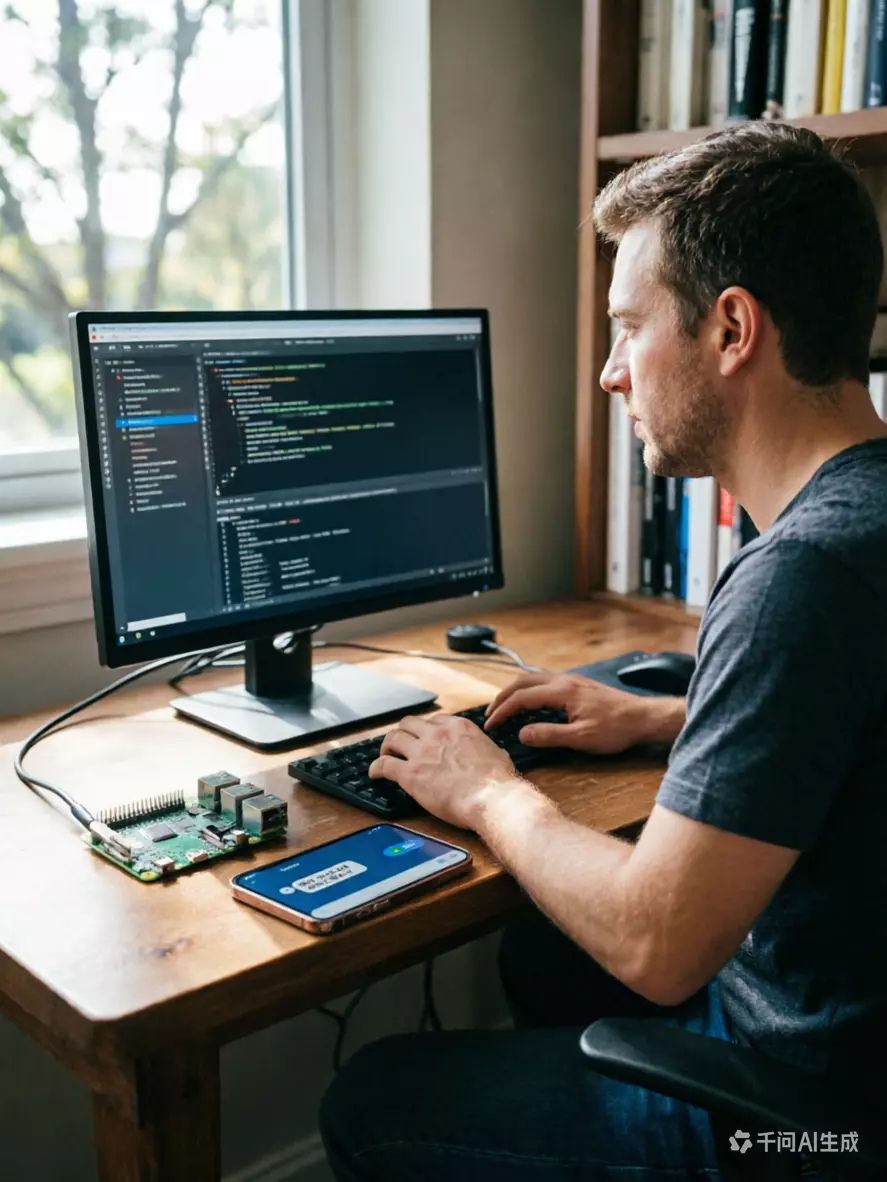
A recent development showcases the effective deployment of an artificial intelligence agent on a Raspberry Pi, repurposing an aged device into an active personal assistant. This innovative project emphasizes the critical importance of data sovereignty and stringent security protocols, including isolated environments and restricted access, thereby presenting a viable model for local AI implementation. Such an initiative underscores the transformative capacity of edge computing, particularly for individuals prioritizing privacy and seeking independent digital aids, free from the constraints of cloud-dependent solutions. The developer's endeavor illustrates a forward-thinking approach to leveraging existing hardware for advanced computational tasks, establishing a benchmark for secure and autonomous AI operations.
The integration of AI capabilities onto a compact, energy-efficient platform like the Raspberry Pi signifies a notable advancement in making sophisticated technology accessible and controllable at a personal level. By meticulously configuring the system to operate autonomously while maintaining robust security, the developer has addressed common concerns regarding data privacy and the potential vulnerabilities associated with AI. This project not only breathes new life into obsolete hardware but also champions a decentralized model of AI, empowering users with full command over their digital interactions and sensitive information. The success of this implementation paves the way for a broader adoption of personal AI agents, where security and user autonomy are paramount considerations.
An innovative project has demonstrated the feasibility of transforming an outdated Raspberry Pi into a dedicated personal AI assistant. Utilizing the OpenClaw framework, this self-hosted system offers comprehensive management for daily tasks and reminders, prioritizing individual data privacy and robust security. The architecture employs rigorous sandboxing and strictly defined permissions to safeguard user information, illustrating a practical model for deploying AI agents directly on local hardware without cloud dependencies. This setup not only offers significant cost savings but also ensures complete user control over personal data.
This pioneering initiative highlights how an engineer successfully reactivated a previously unused Raspberry Pi, turning it into a round-the-clock AI assistant capable of actively managing schedules, dispatching reminders, and coordinating various tasks. Unlike passive chatbots, OpenClaw functions as an autonomous agent, equipped to utilize diverse tools, execute commands, interface with APIs, and perform actions on the user’s behalf. By separating the reasoning (handled by cloud-based language models like Anthropic's Claude) from the execution (managed locally on the Raspberry Pi), the system effectively delegates complex processing while keeping sensitive operations within the user's control. The entire infrastructure is self-contained, providing the user with unequivocal ownership of their data and an enhanced sense of security.
The core of this personal AI assistant project is its unwavering commitment to security, implemented through a multi-layered defense strategy. This approach includes the use of Docker for sandboxing all shell operations, ensuring that the AI agent's actions are confined to isolated containers. Network access is disabled by default within these sandboxes, restricting the agent to explicitly authorized activities such as task management and file reads. Furthermore, the AI operates under a dedicated, non-privileged user account, preventing access to critical system directories or resources outside its designated workspace, thereby minimizing potential vulnerabilities.
Beyond sandboxing and user privilege separation, the system incorporates a 'kill-switch' mechanism that automatically intercepts and blocks any unauthorized commands, ensuring a fail-safe posture. Financial safeguards are also in place, with strict monthly limits on API spending to prevent unforeseen costs from uncontrolled agent behavior. Crucially, personal data, credentials, and browsing history are never stored on or made accessible to the Raspberry Pi; the agent processes only information explicitly provided through direct interaction. This design ensures that even if compromised, the device would merely reveal a task scheduler rather than personal sensitive information. Regular security updates, dependency reviews, and transparent open-source code further bolster the system's resilience, embodying a 'security-first' principle from inception rather than as an afterthought.