Tutorials
Running OpenClaw locally through Ollama provides a powerful solution for managing AI agents without incurring cloud API costs or compromising data privacy. This setup not only removes financial burdens but also places the entire AI operational stack directly under user control. The initial deployment involves preparing a Node.js environment, seamlessly integrating OpenClaw, and configuring Ollama for local model execution. Crucially, integrating robust safety mechanisms, such as Git-based version control and defined permission boundaries, is paramount for safeguarding your system against unintended agent behaviors. This comprehensive approach ensures that autonomous agents operate within secure, controlled parameters, transforming potential risks into manageable processes.
The benefits extend beyond cost savings; local deployment guarantees that sensitive data remains on your machine, eliminating concerns associated with external data processing. The operational independence gained allows for flexible experimentation and scalable deployment, from personal projects to production-level systems. This guide emphasizes the importance of diligent configuration, continuous monitoring, and proactive security measures to maintain a stable and secure AI environment. By investing time in proper setup and adherence to best practices, users can unlock the full potential of OpenClaw with Ollama, creating an efficient, private, and resilient AI agent ecosystem.
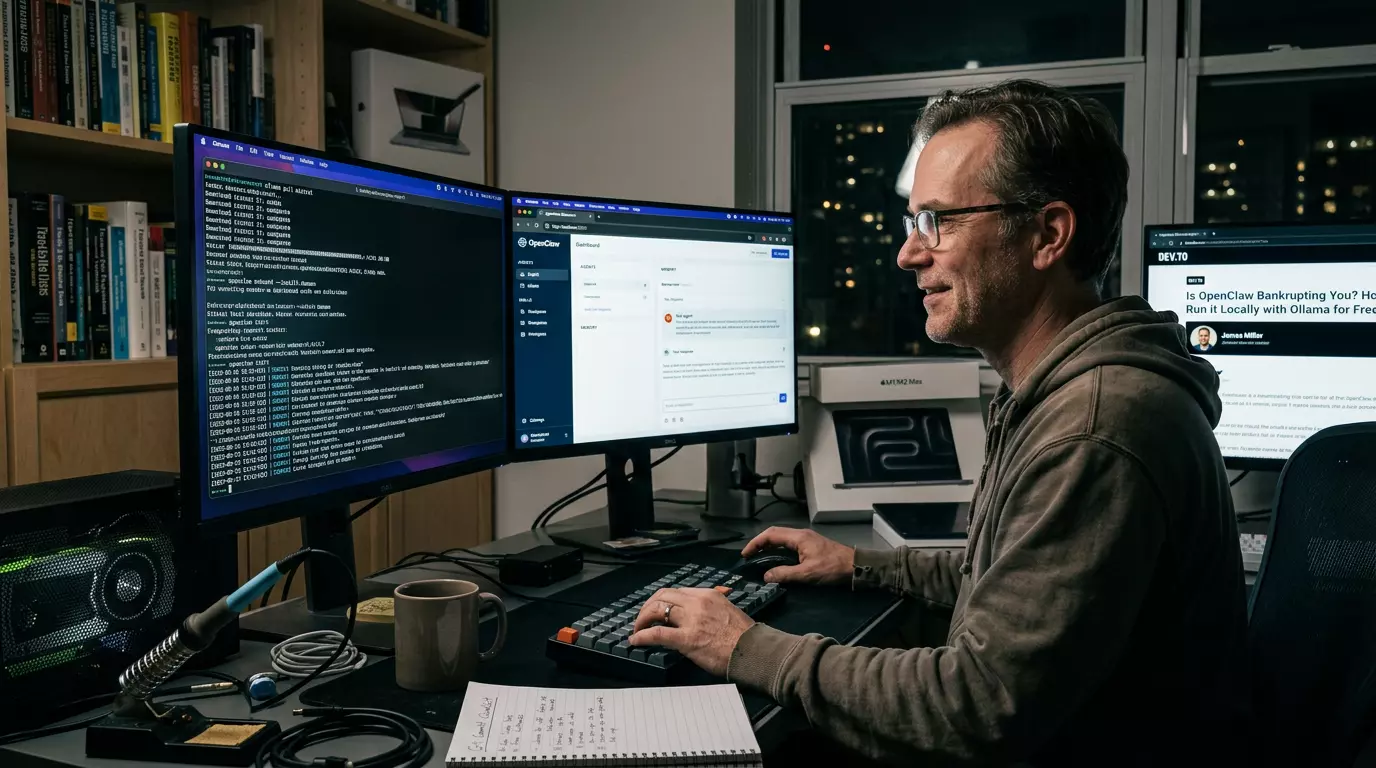
This tutorial outlines the comprehensive process of deploying OpenClaw, a robust open-source AI agent framework, directly on your local machine. By leveraging Ollama, this approach completely bypasses the need for costly cloud API services, translating into significant financial savings and enhanced data privacy. The setup begins with configuring a suitable Node.js environment, followed by the installation of both OpenClaw and Ollama. A critical phase involves the seamless integration of these two powerful tools, enabling OpenClaw to utilize local language models. Furthermore, the guide emphasizes the implementation of essential security controls, including Git-based version control for tracking changes and sandboxing techniques to prevent agent misuse. This structured deployment ensures a fully operational, secure, and economically viable AI agent system right at your fingertips.
To begin, users must prepare their system with Node.js 22+, utilizing environment managers like ServBay or nvm to prevent version conflicts. After securing the Node.js foundation, OpenClaw is installed via its bootstrap script, setting up the framework and its necessary daemon for background operation. The next pivotal step involves installing Ollama, either through graphical interfaces like ServBay or command-line methods, and then downloading open-source language models tailored to your hardware specifications. Connecting OpenClaw to Ollama is then achieved through a simple command, directing all agent requests to your local models. The guide then delves into crucial security protocols: establishing Git version control in your OpenClaw workspace allows for precise tracking and easy rollback of agent configurations, serving as a vital safety net. Additionally, configuring permission boundaries and sandboxed environments, potentially using Docker, isolates agent operations, mitigating risks of system corruption. These steps collectively create a resilient local AI environment, providing complete control over your AI agents while eliminating ongoing cloud expenses.
Beyond initial setup, this section focuses on advanced strategies for maintaining a high-performing and secure local AI agent system. It covers critical aspects such as auditing skills, implementing rigorous sandboxing, and configuring remote access securely. Detailed troubleshooting steps are provided for common issues like command not found errors, connection failures, and performance bottlenecks, ensuring users can independently resolve operational challenges. Moreover, the guide outlines best practices for production deployment, including strategic model selection, comprehensive monitoring and logging, efficient resource management, and automated backup procedures. These practices are designed to ensure the long-term stability, security, and optimal performance of your OpenClaw and Ollama integration.
For sustained operational excellence, regularly audit installed skills within OpenClaw’s directory, meticulously examining their source code for any suspicious functionalities that could compromise system integrity. For maximum isolation, consider running OpenClaw within Docker containers, which confines any potentially malicious agent activities to an isolated environment, thereby protecting your host system. Secure remote access is crucial; never expose OpenClaw directly to the internet. Instead, enable gateway authentication and leverage secure tunneling methods like VPNs or SSH tunnels to protect against unauthorized access and data interception. Troubleshooting common deployment hurdles, such as incorrect Node.js versions or Ollama service interruptions, is addressed with practical solutions. For production environments, adopt a strategic model selection approach, starting with resource-efficient models like Mistral 7B and scaling up based on verified performance needs. Implement robust monitoring and logging practices to track agent behavior and system resource consumption, using tools like top or Task Manager. Automate regular backups of your OpenClaw directory to prevent data loss, and conduct periodic security audits of agent definitions and skills to confirm all changes are intentional and safe. By adhering to these advanced practices, you can ensure a resilient, secure, and highly efficient local AI agent system that fully leverages the capabilities of OpenClaw and Ollama.